
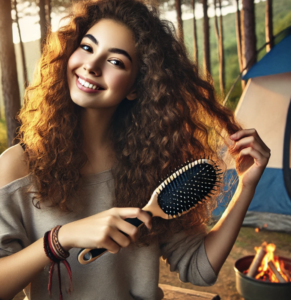
Camp mornings can be the best kind of chaos: cold air, a warm mug, pine needles in your socks, and curls that decided to live their own independent life 🏕️🌲. The right brush makes the difference between enjoying the day and fighting your hair in the dirt. When you’re camping, you need a tool that detangles gently, works with limited water, packs small, cleans fast, and does not snag or snap curls.
What Curly Hair Needs in the Woods
Curly hair is naturally more fragile because the bends in the strand create weak points, and moisture does not travel down the hair shaft as easily as it does with straight hair. Camping adds wind, smoke, sweat, hard water, salt air, and friction from hats, sleeping bags, and hoodies. A “best” brush for camping is less about styling and more about protecting your curl pattern while preventing knots from turning into breakage.
The goal outdoors is simple: keep tangles from tightening, keep the scalp comfortable, and preserve definition so you can shake your curls out and move on with your day.
The Best Choice for Camping
The best hair brush for curly hair when camping is a flexible detangling brush with widely spaced bristles and an easy-rinse design. That combination matters because it does three things at once: it separates knots without yanking, it reduces friction so curls stay springy, and it is practical when you have limited shower time and minimal sink space.
A flexible detangler is also forgiving when your hair is damp, sweaty, or coated in leave-in. It bends with the hair instead of turning every snag into a tug-of-war.
What Makes a Camping-Perfect Detangling Brush
Look for a brush that is lightweight, vented or open-backed, and made from materials that rinse clean. Bristles should be flexible rather than stiff, and they should be spaced far enough apart that you are not breaking up curl clumps like you would with a dense paddle brush. If the brush has a grippy handle, even better, since cold fingers and campground sinks are not exactly a luxury salon setup.
Durability matters, too. Camping gear gets tossed into bags, sat on, dropped, and exposed to heat. A solid detangler that survives that treatment is worth more than a fancy brush that cracks on day two.
For a camping hair kit that stays low-maintenance, pair the brush with a small spray bottle of water, a travel leave-in conditioner, and a satin or microfiber wrap for sleeping. That trio protects curls and keeps brushing from becoming a daily struggle 🌀.
Brush Types That Work Well
A flexible detangling brush is the top pick, but two other tools can be great depending on how you camp and how tight your curl pattern is.
A wide-tooth comb is excellent for very tight curls, thick hair, and “I want zero disruption” curl clumps. It detangles slowly and cleanly, and it is easy to sanitize. The downside is that it can be slower than a brush when you are doing a quick morning reset.
A compact detangling brush is ideal for car camping, glamping, and RV travel where you can bring a slightly larger kit. If you are backpacking, a small flexible detangler wins because it gives you the benefit of a brush without taking up real estate in your pack.
Traditional boar bristle brushes, dense paddles, and fine-tooth styling brushes are poor camping picks for curls. They tend to create frizz, pull too hard on tangles, and trap product, dirt, and lint in a way that is annoying to clean when you are outside.
How to Detangle Curls While Camping
Detangling in the outdoors is all about timing and gentleness. The easiest moment is when hair is damp, not soaking wet and not bone dry. If you do not have a shower, mist hair lightly, smooth in a bit of leave-in, and detangle from the ends upward in small sections.
When you hit a knot, pause and add moisture rather than pulling harder. That one habit prevents most breakage. If you are in a dry or windy climate, detangle inside a tent or vehicle to keep hair from tangling again while you work.
After detangling, scrunch and let curls settle. If you want a simple definition boost, twist a few curl clumps around your finger and let them air dry. The outdoors does not require perfection, only comfort and hair health 🌤️.
Keeping Your Brush Clean on a Trip
Camping hair tools get dirty fast, especially if you are near sand, dusty trails, or smoky fire pits. Choose a brush that is easy to rinse, and do a quick clean every day or two. Remove shed hair first, then rinse the brush with warm water if available. A tiny drop of gentle soap helps cut through leave-in residue. Shake it dry and store it where it can air out.
If you are in a place with limited facilities, even a basic rinse is better than letting product and grit sit on the bristles. A cleaner brush means less scalp irritation and fewer tangles on the next use.
For general campground comfort and safety tips that help keep routines simple, the U.S. National Park Service has a helpful camping safety resource at Staying Safe – Camping 🏞️.
Real-World Camping Situations and the Brush That Fits
Backpacking and minimalist camping call for the smallest, simplest version of the flexible detangler. You want something light, tough, and fast. A flexible detangler plus a travel spray bottle covers most needs without adding bulk.
Car camping gives you the option to add a wide-tooth comb as a backup. If your curls tangle heavily from wind or helmets, the comb can be the “precision tool,” while the brush does the quick daily maintenance.
Beach camping adds salt and tangles, so flexible bristles and easy rinsing become even more important. In that setting, detangling gently right after a rinse helps prevent salty knots from tightening overnight.
Cold-weather camping often means hats, hoods, and friction. A satin bonnet or scarf at night reduces tangles so your brush does less work in the morning.
For broader camping updates and trip ideas that can influence how you pack your kit, outdoor outlets regularly cover gear and campground conditions, including Backpacker and Outside’s Camping section 🏕️.
Picking One Brush and Calling It Done
If you want one clear winner to toss into your bag and trust on every trip, choose a flexible, widely spaced detangling brush in a compact size. It is the most curl-friendly option under real camping conditions, and it matches the way most people actually handle hair outdoors: fast resets, minimal water, and low fuss.
That single tool supports curl health, reduces breakage, and helps you keep your vibe calm even when the campsite is loud, the weather flips, or the schedule changes.
For camping-focused reads and destination inspiration, sources like The Dyrt Magazine and Hipcamp Journal are useful companions when planning trips where conditions can shape your daily routine 🌲.
Conclusion
The best hair brush for curly hair when camping is a flexible detangling brush with widely spaced bristles and a rinse-friendly design. It protects curls, handles knots gently, packs easily, and stays practical when water and time are limited. With a little moisture, a small amount of leave-in, and patient detangling from ends to roots, curls can stay comfortable and defined from the first morning to the last night by the fire 🔥.
For quick background context on the activity itself, Camping offers a simple overview that pairs well with planning a lightweight, curl-friendly kit.