
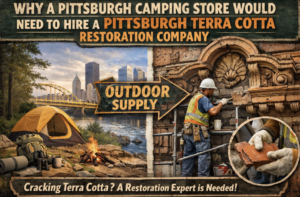
Pittsburgh has a special kind of grit and charm—steel-town bones, neighborhood pride, and buildings that still wear their history on the outside. A lot of Pittsburgh camping stores aren’t sitting in brand-new retail boxes. They’re tucked into older storefronts in places like Lawrenceville, the Strip District, South Side, Bloomfield, and beyond—areas where historic masonry and architectural details are part of the character.
One detail that shows up again and again across older commercial buildings is terra cotta. It’s beautiful, durable, and iconic—but it’s also vulnerable when water, freeze-thaw cycles, and decades of patch jobs start stacking up. That’s where a Pittsburgh Terra Cotta Restoration company becomes more than a “nice-to-have.” For a camping store, it can be a practical move that protects inventory, reduces risk, supports branding, and strengthens long-term property value—all while keeping the building’s character alive. 🏕️
Terra cotta is part of what makes older Pittsburgh storefronts stand out
Terra cotta has been used for decorative and functional architectural elements for a long time, especially on older commercial buildings—cornices, trim bands, parapets, window surrounds, and ornate façade features. When it’s in good condition, it gives a storefront a “built-to-last” feel that customers notice right away.
That matters for a camping store. Outdoor customers are drawn to authenticity—real craftsmanship, real durability, real function. A restored façade helps the building match the product promise inside: gear that’s dependable, rugged, and made for the long haul. If you want a quick grounding on what “terra cotta” is in architecture, Terra cotta is a solid reference.
Water problems can quietly wreck retail spaces and inventory
Camping stores carry expensive, sensitive inventory: technical apparel, down insulation, sleeping bags, electronics, dehydrated foods, water filters, leather goods, and high-margin accessories. Water infiltration doesn’t always show up as a dramatic leak. It can start as slow seepage through compromised mortar, cracked joints, failing parapets, or damaged terra cotta units. Then it becomes humidity, musty odors, staining, and damage that hits product quality and customer experience.
Terra cotta restoration can stop water at the source by addressing cracked units, failing glaze, deteriorated anchors, missing mortar, and improper past repairs. When the outside envelope is tight, the inside stays stable—and stable conditions protect inventory and help maintain a clean, crisp retail environment. 🌧️
Freeze-thaw cycles make small cracks turn into big failures
Pittsburgh weather is not gentle on masonry. Water gets into hairline cracks, temperatures drop, water expands, and suddenly that “tiny issue” becomes spalling, surface loss, or pieces breaking off. That’s not only a building problem—it’s a liability problem for a retail storefront that sees foot traffic right outside the façade.
A restoration company that understands terra cotta details can prevent the domino effect: identify failing units early, repair or replace damaged components appropriately, and rebuild jointing and flashing systems so water can’t keep getting in. That’s a safety win and a cost-control win. ❄️
A safer storefront reduces risk and protects your reputation
A camping store depends on trust. People come in for gear that might support a family trip, a backcountry weekend, or a first camping experience with kids. If your building exterior looks like it’s cracking, crumbling, or patched with mismatched materials, it sends the wrong signal—even if your products are top-tier.
Beyond perception, there’s the real-world risk: loose fragments, deteriorated cornices, or unstable parapets can create hazards. Taking care of terra cotta isn’t vanity; it’s responsible ownership and responsible retail operations.
Camping demand and trends can surge, and your storefront needs to be ready
Camping participation has been strong in recent years, and consumer interest tends to spike around travel shifts, outdoor lifestyle trends, and regional campground access changes. Keeping your retail space dialed-in helps you capture that wave when it hits—especially in spring and early summer.
If you like keeping an eye on what’s happening in camping participation and consumer behavior, The Dyrt’s 2026 Camping Report is one example of a widely shared annual report that tracks trends. When the market gets busy, the last thing a store needs is scaffolding out front for emergency façade work or a surprise water issue inside. 🏕️📈
Camping news is local too—Pennsylvania closures and access shifts affect buying patterns
Outdoor retail isn’t just national trends; it’s what’s happening within a few hours of Pittsburgh. Campground closures, reservation changes, and access issues can alter what customers buy (more dispersed camping gear, more off-grid water solutions, more solar, more truck camping setups, etc.).
For example, news about Pennsylvania campground disruptions can ripple into buying behavior for Pittsburgh-area campers. One regional news piece that highlights how campground availability can change is Axios Pittsburgh coverage on Raystown Lake campground closures. When customers adapt, stores that look stable, professional, and ready tend to win their trust.
Historic character is branding—especially for outdoor stores
Outdoor retail is emotional. People buy gear because they want freedom, capability, family memories, and confidence. A building with restored historic detail gives your store a story before anyone steps inside. It photographs better. It feels established. It looks like it belongs.
That matters for:
-
Walk-in conversion from street traffic
-
Social media content and storefront photos
-
Local press and community features
-
Partnerships with outfitters, guides, and event organizers
A restored terra cotta façade can become a signature look—something customers recognize in a feed or remember when they’re telling a friend where they bought their pack. 📸
Better building performance can support better operations
When exterior masonry and terra cotta systems fail, you often see related operational headaches:
-
Drafts and temperature swings near exterior walls
-
Higher HVAC load from moisture infiltration
-
Persistent “that smell” that customers notice immediately
-
Frequent interior touch-ups that never fully solve the root issue
A proper restoration scope often includes compatible materials and detailing that helps the building shed water correctly and breathe as intended—critical for older masonry assemblies. That can stabilize interior conditions and make the store more comfortable for shoppers and staff alike. 🧥
Outdoor industry signals point to continued participation—retail spaces should keep pace
If you follow the business side of outdoor recreation, the Outdoor Industry Association regularly publishes participation insights and industry updates. One example is their executive summary on participation trends, which includes camping among “gateway activities” people are joining in large numbers: Outdoor Participation Trends Report – Executive Summary. Retailers that keep their physical presence strong are better positioned to benefit when participation holds steady or grows.
Your building exterior is part of customer experience, just like your gear wall
Camping customers are detail-oriented. They care about zippers, seams, materials, and whether a product will hold up when conditions get tough. They notice if a storefront looks neglected the same way they notice if a tent fly is fraying.
A clean, restored exterior signals pride and competence. It supports premium pricing. It makes the store feel like a destination, not just another place that sells stuff. And if you’re sharing outdoor gear updates and reviews from news-driven sources, keeping tabs on sites like GearJunkie can be part of your content mix while your storefront visually reinforces that you’re plugged into the outdoor world. ⛺
Restoration helps preserve value, especially if you lease or plan to expand
Whether you own your building or lease it, exterior condition affects negotiations, long-term costs, and future options. If you own, restoration protects the asset and can prevent much larger structural repair bills later. If you lease, coordinating restoration (often with the property owner) can protect your inventory and improve your sales environment—plus it can strengthen your position as a serious tenant who cares about the property.
Either way, staying ahead of exterior failures is almost always cheaper and less disruptive than reacting after damage spreads.
Conclusion
A Pittsburgh camping store hiring a Pittsburgh terra cotta restoration company is not a weird crossover—it’s smart, practical stewardship. Terra cotta is part of the city’s architectural identity, and when it starts failing, it can create water problems, safety risks, operational headaches, and brand drag.
Restoration protects the building envelope, supports customer confidence, keeps inventory safer, and elevates the storefront as a piece of Pittsburgh history that still works for modern retail. With camping trends, access changes, and outdoor participation continuing to shape buying behavior, a stable, sharp-looking, well-maintained storefront becomes a competitive advantage—not just a pretty façade. 🏕️✨